
★★★★★
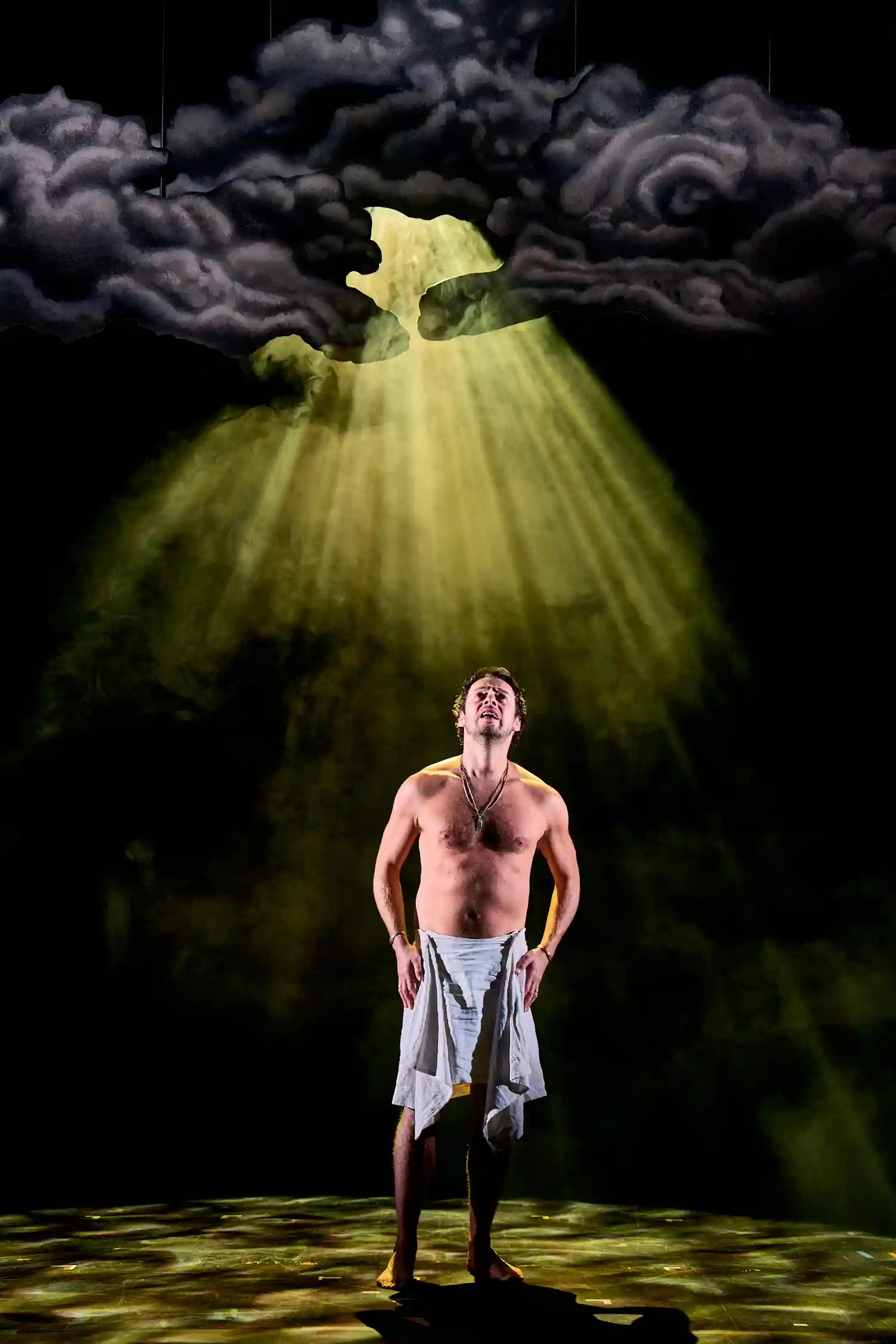
With a loud thunder clap and a flash of lightning, this ‘theatrical inquiry’ opens with a man clad in a loin cloth and a voice from the sky. The man is Herschel Fink. He is a Jew.
Now, those who remember the events at the Royal Court Theatre last year will recognise the name. The theatre found itself at the centre of an antisemitism row when a character who was a manipulative billionaire was given an obviously Jewish name, despite the character not being Jewish. Less than a year later, and the same theatre is exploring antisemitism in the UK in the 21st century.
And this is an exploration that is long overdue and absolutely essential.
I will state up front that I am not Jewish and so have never experienced antisemitism. However this is a topic that holds particular interest to me. Until July this year I was a Religious Studies teacher. I taught Judaism at both GCSE and A Level. My specialism was Holocaust Education and this is still something I am passionate about. I had another reason for seeing this play. I’m in the middle of a research scholarship with Oxford University and my focus is in how Holocaust Education can help combat antisemitism in the UK.
This play, written by Jonathan Freedland was based on an idea by Tracy-Ann Oberman. Twelve Jews of all backgrounds in the UK were interviewed earlier this year about what it’s like to be Jewish today. From the well-known, such as MP Margaret Hodge and actor Tracy-Ann Oberman, to the unknown, these people have vastly different lives. Except that they have all experienced antisemitism in some form. It is their words that we hear, spoken by eight actors.
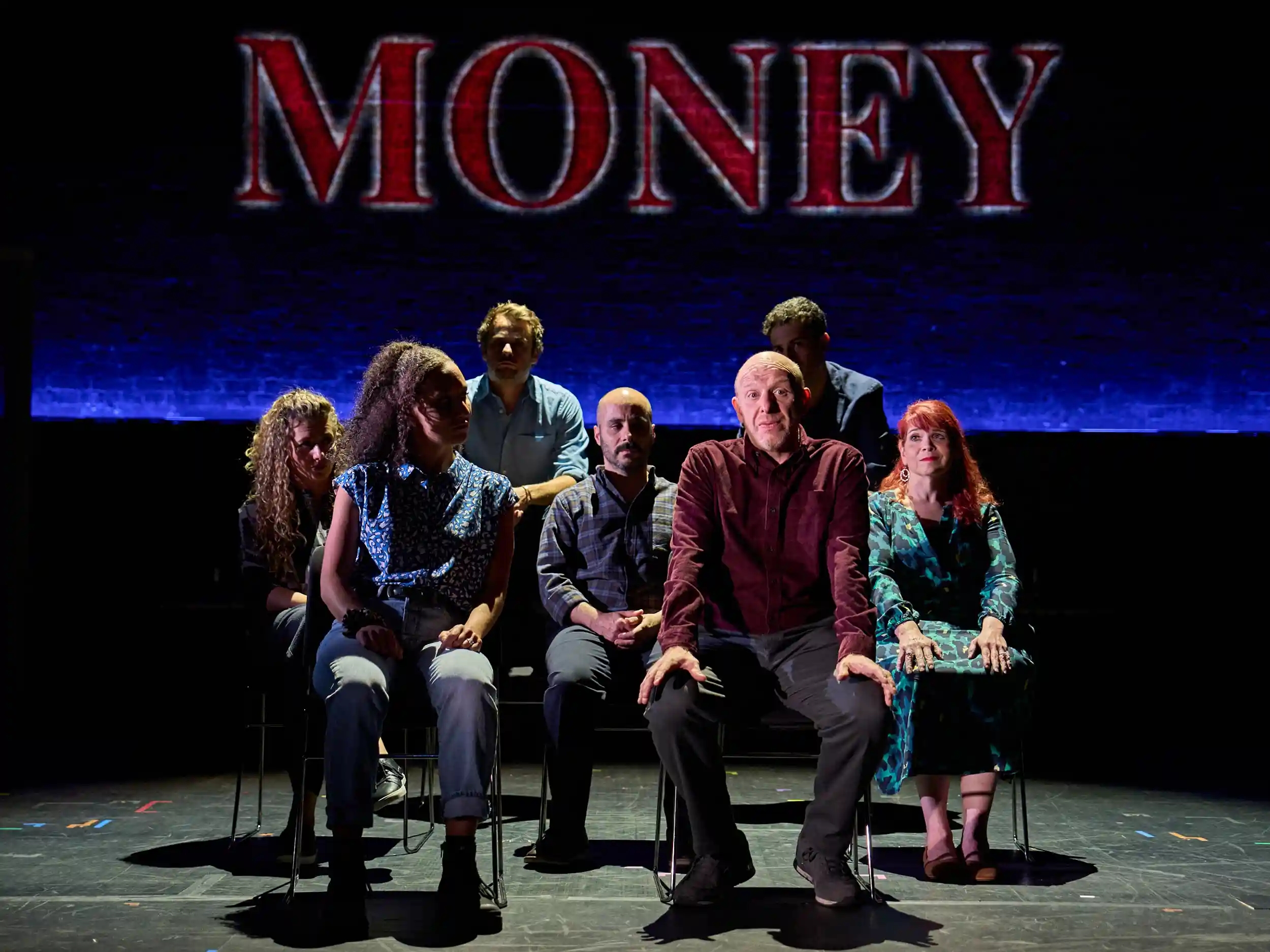
After an introduction to these people we are taken through the three main antisemitic tropes that have existed since the medieval times: money, blood (specifically the blood libel), and power. The ludicrous nature of the far-rights antisemitic claims about Jews are exposed but also the origins fo these ideas are detailed. The interviewees reveal tweets of abuse they have received, and document their experiences – including being told by a shop owner that the Jews are responsible for spreading the coronavirus. Interestingly the comparison with claims in the 1300s that the Jews spread the black death were not mentioned. Directors Vicky Featherstone and Audrey Sheffield use a mixture of direct address and medieval tableaus. The rather unexpected musical number ‘It was the Jews that did it’ jars a bit but gets its point across.
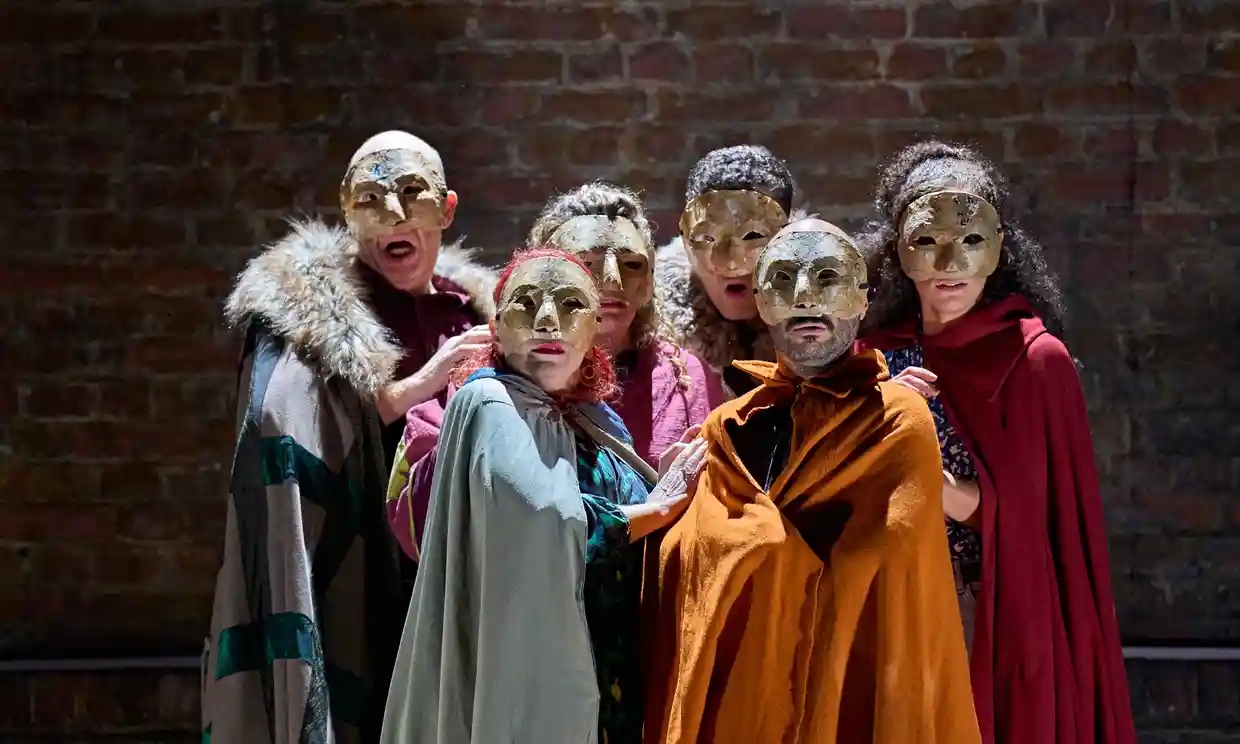
The play then shifts to look at the issue of Israel and the debate on whether it is antisemitic to be against Israel: is anti-zionism just another form of antisemitism? As one of the interviewees put it – I live in England, what does the actions of the Israeli government have to do with me? This section on Israel was the least resolved for me – perhaps an indication of the multiplicity of views on the subject.
This play is shocking – and it needs to be. I imagine that a Jew would view it differently to a non-Jew and I was left wondering which audience it was aimed at. It didn’t seem any coincidence that it was being performed at the Royal Court Theatre. Since the 1950s with John Osbourne’s plays such as Don’t Look Back in Anger’ it has been a venue for controversial new works. This is certainly not the venue for conservative and traditional entertainment. It was clear from the beginning of this play that it was – at least partly – directed at the left. Those who claim to be anti-racist but don’t see antisemitism as being a racist attitude.
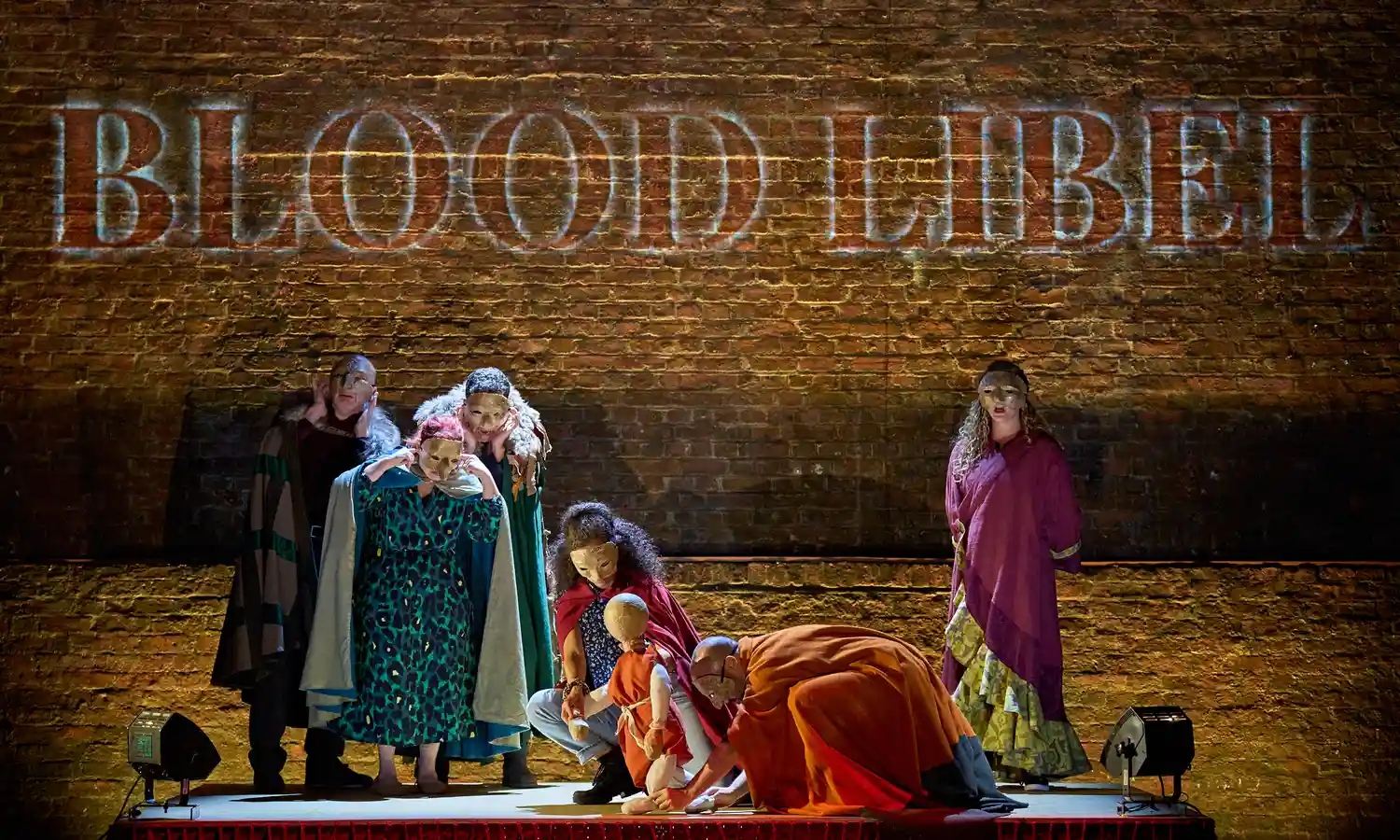
Interviewee Dave Rich addresses this and his words come near the end of the play. As he points out the three main antisemitic tropes have been engrained in our society for centuries. Part of our culture, our literature, our works of art. He feels that we cannot be blamed for having these views as they have been normalised. So you can feel you are anti-racist but still joke about the Jews having all the money.
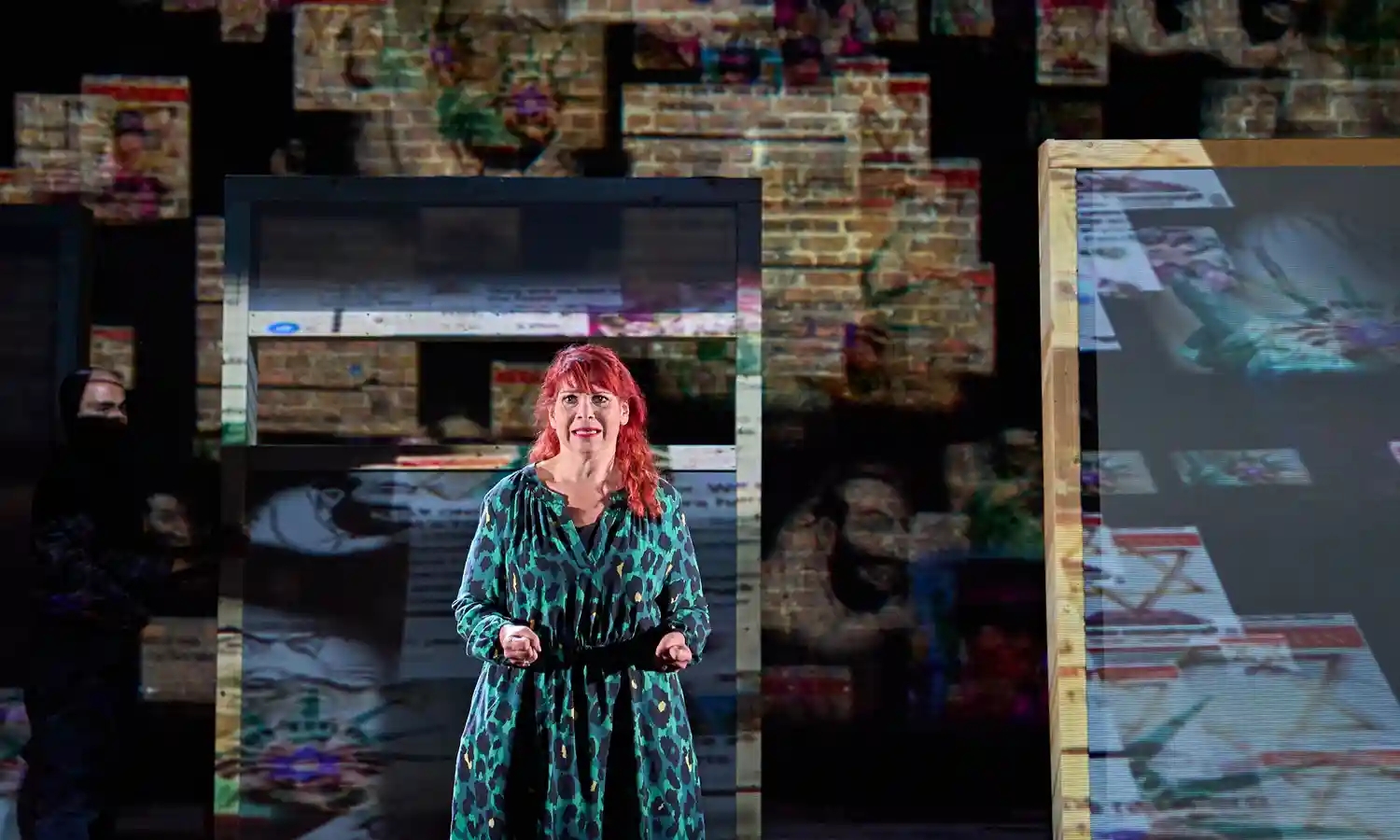
What makes a difference is what we do when the antisemitic nature of these thoughts are brought to our attention. I feel that this is ultimately the aim of this play. The eight actors speak directly to us at the end. They are all Jews and remind us that they are not the antisemitic caricatures that some people might think.
I cannot think of a more important play in recent years – I just hope it will reach the audience that need to see it.
Jews. In Their Own Words is at the Royal Court Theatre until the 22nd October
Photos © Manuel Harlan
 Act 1 Beginners